Showing posts with label feminization. Show all posts

Monday, 23 January 2017

(Sequel of article: Hidden face of Agriculture- Bitter Truth by Ramsundar)


If we get into time machine and go back, we can recall that women is the one who introduced settled agriculture while men were still hunters and gatherers. Ironically, In present scenario, the women turned out to be a hidden face of Agriculture.  She is masked by rigid societal practices, cultural taboo, rigid rules of lands.  Despite that she emerges as a sprout of hope.


We cannot disagree that women make important contribution to rural economy as Farmers, agricultural labourers and entrepreneurs.  Small scale farming, micro enterprises and cottage industries constitute the largest self employment sectors in India.  FAO (Food and Agricultural Organisation) states that promoting gender equality is not only good for women, it is also good for agriculture development.


Now, rural women farmers are involved in hybrid seed production through seed village concept, they use Information and communication technology tools, with Jan Dhan Yojna they entered into formal financial structure. Successful women farmers take the benefits of crop diversification by shifting to floriculture crops which gives them added profit through value addition like veni making, garland making, etc., Similarly apiculture, animal husbandry, food processing, sericulture are other fields in which the women farmers are reaping huge benefits.
HFA imot forum nive photo
Picture credit : Nivendran


When women gets additional income, it is true that they spend more of it in food, health, clothing and education for their children  men.  This has short term benefits for their family well being and in long term for national development.


Now, “Organic farming” becomes a buzzword everywhere. Women are saviour of organic farming. Traditionally, Women are considered to be the seed preservationists.  Their support in cattle rearing reading is important for generation of organic inputs.  Similarly, the Peri-urban vegetable farming, rooftop gardens, kitchen gardens in urban areas are dominated by female. This shows the healthy change of status of women in both urban and rural agriculture.


The National Commission on Farmers also dealt with issue of Feminization of poverty and agriculture in detail and in its report suggested setting up of creches, day care centres and other support services for women farmers and farm labourers. At the same time economic interests of women are safeguarded through Self Help Group (SHG) movement and Cooperatives.


At the same time, Government schemes like Mahila Kisan Sashaktikaran Pariyojna (MKSP), as a subcomponent of NRLM (National Rural Livelihood Mission) was started to enhance productive participation of women in agriculture and to create livelihood opportunities for women in agriculture.  Additionally, MGNREGS (Mahatma Gandhi National Rural employment Guarantee scheme) is reported to have increased the farm income of women agricultural labourers.
snap shot of MKSP home page


Similarly various state government scheme targets deprived women and tribal women like Mahalir thittam of Tamil Nadu which make credit accessible to women through Self Help Groups in addition to employment generation.


As a whole, Though the changing trend brings Women, The hidden face of Agriculture in limelight it should be aggregated in all spheres.  Discrimination under law must be reduced. Women farmers should be provided with equal access to resources and opportunities. Government would come forward with gender inclusive policies, gender responsive budgeting in agriculture.  This will result in agriculture development and also women empowerment.

(M. Ram Sundar is a Horticulture graduate.  He is interested in writing and reading books. He is also the admin of IMoT forum. sundar.ram94@gmail.com  )

Picture credits: Nivendran
Monday, 16 January 2017

Maruthur Gopalan Ramachandran popularly known to the world by his initials, MGR was a famous Indian politician, Actor, Tamil activist. As called by his followers "Puratchi thalaivar" he stood as a great Revolutionary leader in all spheres of his life.  IMoT forum remembers the great leader in his 100th Birth Anniversary.

imotforum_MGR_facts
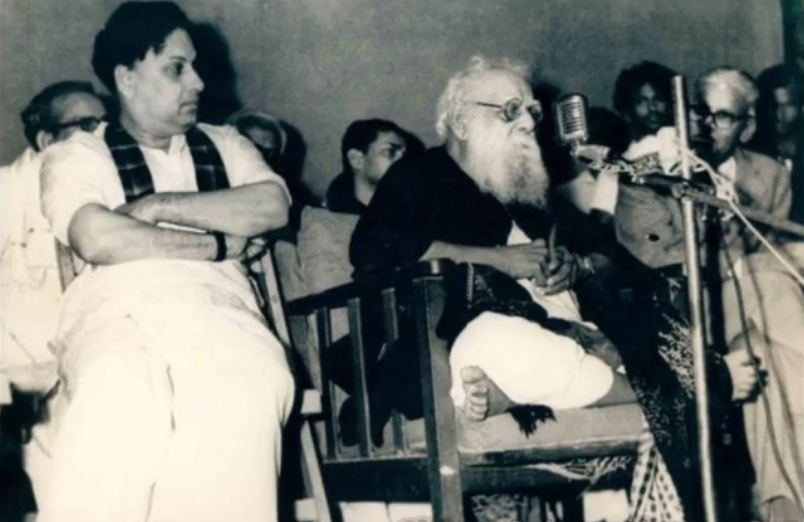
MGR with EVR Periyar in a public meeting
1. MGR was born on 17 January 1917, in British Ceylon (now Sri Lanka), to immigrant Keralite parents. After his father's death, at the age of six he joined drama group this paved way to the world of cinema.

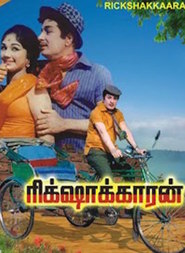
2. His first debut film was Sati Leelavati (1935), but film Rajakumari (1947) written by M. Karunanidhi made a huge breakthrough in his carrier. He won the National Film Award for Best Actor for the film Rickshawkaran in 1972. 
imotforum_MGRfacts
3. Koondukkili (1954) was the only movie in which MGR and Sivaji Ganeshan acted together.  And he finished his acting career in the film Maduraiyai Meeta Sundarapandian (1978).

4. He was first elected to the Tamil Nadu Legislative Assembly in 1967. After the death of his mentor, Annadurai from St.Thomas mount as a candidate of  DMK (Dravida Munnetra Kazhagam) party.

imotforum_MGR facts

5. He floated a new party ADMK (Anna Dravida Munnetra Kazhagam) in 1972 and upon successfully winning the 1977 state elections, MGR became the Chief Minister of Tamil Nadu On 30 June 1977, remaining in office till his death in 1987.

7. He started universal Nutritious mid-day-meal scheme for children from the age of 2 to 15. He added old people who had no family support to the scheme to have a meal.

8. He also pioneered in India, by providing Thirty percent job reservation for women which was adopted by the Government of India many years later.  He introduced Women special buses and instrumental in setting up of Mother Teresa Women's University.


9. He was the founder and editor of “Thai” weekly magazine and “Anna” daily newspaper in Tamil. And penned his autobiography as ‘Naan Yaen Piranthaen’ (‘Why I was born’).


10. More than 2 million people participated in MGR's funeral. MGR memorial was built on the Marina beach in 1988 and was inaugurated by Janaki Ramachandran. He became the second Chief Minister from the state of Tamil Nadu to receive the Bharat Ratna posthumously.
(Compiled by M.Ram Sundar, Admin of IMoT Forum. admin@imotforum.com )


Sunday, 15 January 2017

Hidden face of Agriculture - A bitter truth

It was an inter school art event organised in our college for children, “Agriculture 2020” was the theme for painting competition.  I observed a undesirable commonality in most of their paintings. “A male with white dhotis up to their knees, ploughing the field either in ox plough or tractor”. As like the child's paintings, another face of Agriculture is hidden in the present agriculture scenario.


The hidden face, Women, comprises on an average 43% of the agricultural labor force in developing countries.  Contrasting to our belief, Agricultural sector employs 80% of all economically active women in India.  According to reports of NSSO, about 18% of farm families is India are headed by women.  Though women contribute so much to agriculture, they were regarded widely as wageless and underpaid employees of their farms and they control over less than 13% of land.

Do the female farmers produce less or their efficiency is lower compared to male  farmers ? The answer might be yes.  The productivity gap is not linked to their gender status but caused by different in input use and control over farm operations.  For example, Land, the important asset of agriculture is traditionally passed down the male line in India. In the same way, all subsidies, farm insurance benefits, even farm credit goes to landowners i.e., male farmers.  So they enjoy control over land than female counterparts.

As by the report of FAO, female farmers are much less likely to purchase inputs such as fertilizers, improved seeds and mechanical equipment.  Similarly, most of modern tools and farm machineries are designed for male farmers.  Female friendly tractors, sprayers, harvesters are hardly available.  This reduces the efficiency of female farmer.


The cost of gender gap in agriculture is huge.  One cannot underestimate the negative impact of ignoring huge female population of food and milk producers in India. This gender gap has lead to food insecurity and nutritional deficiency in rural households due to poor purchasing power of female farmers. Gender gap also affect social parameters like literacy, health and sanitation because they receive lower wages for the same work, even when they have the same experience and qualifications.  Ultimately it drives India towards feminization of poverty.

In a macroeconomic level, two factors related to agriculture are of great concern. First, low productivity per acre of land. This is due to inability to utilize female population in increasing the productivity. The Second, huge seasonal and disguised unemployment of women in agriculture. This is due to lack of other employment opportunities for women in rural India and male dominance over their wife or girl children to work as unpaid labourers in their land.  According to me, these two concerns should be addressed as first step towards women empowerment.

The agricultural policies and programmes towards addressing this issue is not so satisfactory.  The Justice Verma Committee has emphasized the need for looking at the status of women. Nearly, 40 crore women out of the total of 60 crore female population depend on crop and animal husbandry, forestry, agro processing and agribusiness for their livelihood, yet are handicapped by male-biased laws. The pending of Women Farmers Entitlement Bill, 2011 is an example.

So, Government should come out with new plans, programmes and schemes to achieve the twin goals of United nation’s Sustainable development Goals, to end poverty (Goal 1) and to ensure Gender Equality (Goal 5).  Above all, behavioral changes should happen at ground level to bring “hidden face of Agriculture” to limelight and lead us towards food security and national development.


(M. Ram Sundar is a Horticulture graduate.  He is interested in writing and reading books. He is also the admin of IMoT forum. sundar.ram94@gmail.com )


Picture credits: Nivendran
Contact us

Name

Email *

Message *